One more by the end of the year (within hours).
Usually I put six comics reviews in here, with as many prose books as I’ve read since last time. Six just seems like a round number, not too much, not too little, as simple as that. My gut says that’s a good number. This time there are a few more, just to complete a period in time. This is stuff I read earlier this year, mostly what I was putting up on eBay (and now mostly sold, luckily). I have a system for reading this stuff before I get rid of it (mostly), though it shifts, and sometimes I get stuck on a longer work that blocks getting more stuff read, especially by volume. This period was just a lot of books. Most of it is minor work, and no further theme than stuff I had next on the list to read, but there are a few nuggets in there. I had actually been so caught up on prose books that I nearly didn’t have one to post for last issue (until I got one done as I was producing it), then I started listening to audiobooks (the way I get through prose books these days) on the way to work, and for a gig that went a few weeks I burned through a number (most that I ripped from library CDs some years ago). If that gig was longer or I had other gigs like that I’d have a flood of book reviews like you’ve never seen (since I could get through, on average, about a book a week. Among these here are four books I finished in less than one single week). But I’m doing other stuff now and not listening to as many, so not getting through as many books, back to listening when I’m giving platelets (at the Red Cross blood bank -- ask me how!) or driving back from dropping off The Kid. (No further update of what I’m listening to or how than that.)
(The above was written at the beginning of the year, maybe January, and I haven't gone back to this zine since. I've read plenty more and I've even written some more about it all, but haven't gotten back to this final form until now, in late December, and only doing it now before the end of the year so I can say I've put out at least one zine a year for the last 30-some years. I've had this deadline before. I also left the above largely untouched, but you won't be able to gauge progress from it until the next issue (which hopefully won't come in late December again).)
The new formatting was an accident. I couldn't get the images to center as usual, and on my way to getting it to work I stumbled upon how to insert it into the text, and I probably like that better. I'm still not comfortable with how they're not all aligned with the first line, but I'm not sweating it (another display of my dwindling perfectionism in this age).
REVIEWS
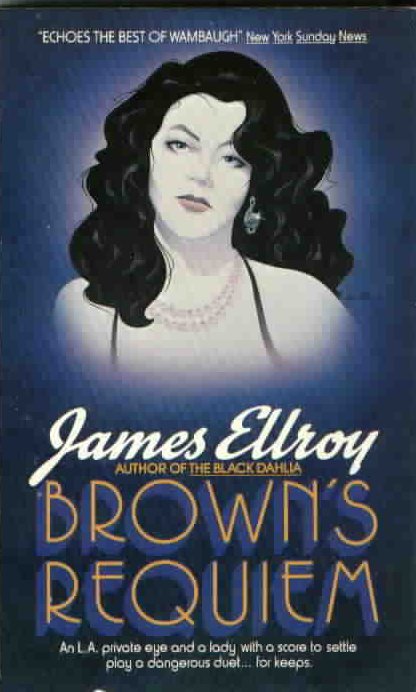
 Clandestine by James Ellroy (audiobook). Back when I was seriously getting into crime fiction, James Robinson recommended Clandestine as his favorite Ellroy book, which I kept in mind even as I read most of everything but that. But I eventually circled back to it, more because I found access to the audiobook rather than the paperback copy I got for a buck. It’s closer to Ellroy’s first, Brown’s Requiem, as a straight detective novel, sometimes too straight, but solid enough to get him more work and possibly give him the artistic freedom to develop the crazy style he developed and made a wider name on. There’s a story-within-a-story that threatens to eclipse the rest in which it’s couched. It’s Ellroy going with the story, digging into a particular character, without the structure of an entire novel. If Ellroy could be accused of style over substance in his later work (not actually the case, but the style has a way of going so far that it can look like it), this micro story is him relying entirely on plot -- just a character’s very involved life-story, sprawling but with a minimalism of only the essential details -- very oppositite of the style he would develop later, but still existing in this and the past work. These first two of his are solid, and even a great entry in modern detective fiction, but Ellroy gained his notoriety when his writing became electrically charged from The Black Dahlia and on, and this is a fleeting vestige of a pleasing but temperate style and what he could do without as much verbosity for provactivity’s sake. It’s a combination of these factors that make his work so compelling, but it’s equally compelling to see how he started, and maybe even connect to where he went after that (though I’m not sure if I’ll go back and re-read the next ones, as great as the L.A. Quartet are, but also a toss-up between also checking out anything past American Tabloid, which is where I stopped (not completely on purpose, I just didn’t notice as much of his stuff, and even get to keep getting surprised that he kept putting out books over the last 30 years. (But it also could have to do with My Dark Places, one book I went to to continue, but also how far that one went to amounting to very little, expect for the story of how they did a lot of work to amount to nothing, that maybe at least subconscioiusly I was done with him, until I could get back to this, based on an aged recommendation hanging around like an obligation.)) Also, the title seems more like something to do with spies, but it’s still a good word, and might as well work for this if there’s not a better one.

Hard Candy by Andrew Vachss (audiobook). The next for me in the Burke saga. I know I had the printed book on a bookshelf, and may have assumed I read it years ago, but listening to this now, nothing registers in my memory of having had it before, which also means that I jumped from the one two ahead of this, to the one before this, then way ahead to the ninth in the series, which is astoundingly unlike me, to consume them in order but to also leave out so many between. It’s fine to go back and do the whole thing properly in order now, except for whatever time I lost back then reading these when I could have been on something else (though that could have been books that wouldn’t have nourished me, like the Wild Cards series). This one is a lot of the same joyless grittiness as they ever were, but pulls most of its plot as threads from before, very purposely connecting back to anything that has been established, and hopefully laying it to rest since it doesn’t go forward with anything. Though even wallowing in familiar ground is satisfying when it’s so gritty and richly rendered, with Burke as consistent as he ever needs to be, though with his tangents not yet as fully realized. That the book takes a good third if not half to even arrive at a story is a given at this point, especially when that catching up stretches beyond even that to most of it, and all of it grinding so low that peaks and valleys in the narrative barely register, like the quiet killings that happen regularly. The rare new character that comes in is a standard femme fatale, who connects in the series of previous femme fatales (who all show up) as only a purposeful definition as distant from the others as possible, which is pinning down a shape connecting them all that might run out of this (though that new character could be left out as to not be another piece to slow it down). Knowing there are more significant spots coming up, this is just some connective tissue, leading away from what came before, but maybe also summing it up, as if the entire Burke saga is a series of quadrilogies. Though knowing this is going to end eventually -- another dozen books -- is a dark delight, that surely how it wraps up will only be tragic, but wondering how bad it will get by then, and how awful it can be until it gets there.

Let's Go (so We Can Get Back) by Jeff Tweedy. I finished this quickly and unexpectedly (since it was an audiobook and I had no way to find how long it had left), and it was a weekend at work so I could jump on another book. I had this in print from a gift a few Christmases ago (never a great idea for a present for me these days since I’ll only get through a book if it's available on audiobook. The audiobook works best for me, especially when it’s readily available on Libby (like most music bios are, like the Beastie Boys and Lanegan books -- out of everything, they seem to always be available)). I didn’t have high expectations for it, and at worst it would be just another rock bio with more personal details about a musician’s life than anyone would need, since I’m only about the music, especially with Tweedy’s band Wilco of which I’m a fan but not so much that I need more background on them than I have (and yet I do for Pixies, who are at least as boring as people). But Tweedy wrote it like he read rock bios and only did his own if he could do his own thing, so the historical facts are just background for general ideas, more concerned with how he feels about something and how he’s living the life, with explanation of how he got there instead of detailing what’s happened in his life. His other motivation is also clearly to answer the questions he’s had to answer in every interview since the beginning, to put a definitive end to the same responses he’s had to give for years -- about the drugs, the firing of Jay Farrar from Wilco, breaking up Uncle Tupelo, his migraines, why he’s more involved with his family and solo work than doing more Wilco. Also a look into his creative process, though not enough on their masterpiece Yankee Hotel Foxtrot (which is so monumental a work that it could barely be enough no matter how much he wrote, and probably more than he needed to), but also too much on A Ghost is Born (what I was so excited for in a follow-up to YHF that turned out to be a little too experimental, and too much noise and near-blank space). It’s fair, and well-constructed to keep a narrative going. It doesn’t meander so much, helped by going chronologically through the events of his life that resonate with where he is now, which is fairly recently, but before a spate of Wilco activity, after he did some side-projects with family, and, especially with this paved and behind him, on to the next phase in his creative life. It’s a relatively light and breezy book, but matching Tweedy’s public and creative persona, as any easy-going guy, and here he’s explaining how some things have gone and how he got there. It’s actually a refreshing break from the typical rock bio which is the first half being from their birth to when they got big, with far more details than anyone would need from a place in time when no one needed to know what they did (from an effort to build them to how they could get big (and get to write a book about their life) then disconnects when they became the person who consumed far too many drugs), then gloss over the height of their fame, which should be the most exciting part, then hit rock bottom and probably almost died, then cleaned themselves up and are living great, even if they’re not doing work anywhere near what they used to (with or without the drugs), and now they just want to tell you about how great their family is (without trying to convince you of their sobriety since it’s a given if they’re doing a book). Tweedy has a lot of that but he’s much more casual about it, and doesn’t want, or need, to get into details, especially knowing he didn’t live a rock n’ roll lifestyle even when he did. He has some stories, though none all that sordid, and he realizes that he could be considered a rock star, and he’s gracious that he gets to live making music (and gets to write a book about his life that people will buy and read), so he’s as pleasant as anyone could imagine, and it comes through in the writing. He also narrates his own audiobook, giving it an immediacy and warmth that would be lost if anyone else read the words, like trying to live someone else’s life -- it probably wouldn’t work (though getting an audiobook from print is like having a script in a conversation around a campfire, though it doesn’t change the content). It’s an easy read (I got through the whole audiobook in less than 24 hours), but the print version doesn’t have any pictures, which seems like a miss when there are so many available (and accessible. But it would be the kind of addition that makes most bios complete, archiving some images with the memoir details). Such breezy writing wouldn’t make most rock stories -- especially when the drugs are harder and the events more tragic -- but something like this once in a while, especially when it fits its author so well, is a delightful effort.

City of Quartz by Mike Davis. A friend got me this book back in the ‘90s, when it was still relatively new and print was revered, and we were both in L.A. and young enough to be in love with the city. My friend even inscribed it (making so I probably won’t sell it). I just knew it was a big book that would probably get bigger once I started it, then get stuck in it for who-knows-how-long, but feel obligated to read it since it was a gift. I kept it (and its sequel) on a bookshelf for nearly 30 years, wondering when I might actually have the wherewithal to ever get to it, and if I was even capable of earning such a thing. But then audiobooks became my thing, and I was getting through stacks of books that had been languishing on my shelves, finally getting through them in a fraction of the time it would have taken me to read, and maybe even getting more out of them when I wasn’t dragging through looking at print. I was surprised to even have found it, since it seemed more like a textbook, but once it came up on Overdrive/Libby, I could wait patiently for my turn with it (and baffled why an item that can easily be digitally copied has a finite amount of copies available), and finally it came up. I started digging into it over a weekend when I had to work, giddy that I could finally consume this book that had waited so long for me. By that time I had moved out of L.A. (though adjacent) and my friend had found more love for San Francisco (which probably has an even better book about it), but I still held it as an obligation to explore, if to respect the time I’d had as part of it and how that time had formed me and where I got to by then. It was hard to know what kind of context I needed for it, but I hoped it was user-friendly enough that I could dive into it like any book. It is certainly something like a textbook (then finding out my wife had to read this for one of her classes at UCLA. (Before his passing, the author even appeared in a documentary on the L.A. riots in the ‘90s, showing his relevance and even getting a glimpse of an update on his perspective of the city (though almost equally as old as the book)). It could have had the easier title of “A Secret History of Los Angeles,” and maybe that would make it less obtuse, if not for the thousand other books that took that name and probably weren’t nearly as trenchant in their study. This actually doesn’t express a broad explanation of what went before in the city, as if to excuse that place's excesses and what it became, and there might not even be any shocks (especially now), but it drills into a few events of the past, especially how CalArts helped build L.A.’s creative community and how special-interest groups took a fast grasp on much of what want on in the city (and particularly, of course, the money), and how (its own story, obviously). Bafflingly it even spends a good chunk concentrated on Fontana, which might be just another sub-city in the abstract to anyone else in the world, but the locals know it’s an hour outside of downtown (if there’s no traffic), far on the edge of the county (nearer to the warzone that is San Bernardino, no less), and squarely in the middle of B.F.E. (though it’s tried to come along the last few years, it’s only swollen to match the the surrounding environs, so as it be nothing more when equal). It’s a look at how a relatively few people helped shape strategic parts of the city, and enough detail so as to make it lush, and to paint L.A. as a fairly wondrous place (if that’s not a given even when not adroitly described). But being nearly 30 years old, the book is a relic, and it seems even dustier in that era before the Internet. It’s a capable landmark of time, capturing glimpses of representative pieces of the city and its historical culture, but it seems like only half a history when there’s so much that has happened since, up to now. Though there’s a second book, Ecology of Fear (an equally obtuse title), which was also gifted to me at the same time, it has to be only as dated. But it’s an overall stirring look at a city of wonder with a rich and sometimes sinister history (though little that’s particularly scandalous). It’s a dense book but a worthy look at the city from a unique and learned perspective, one not necessarily affectionate toward it, but maybe contributing to a love that could already have been there.

Snuff by Chuck Palahniuk. It’s a delight to have been reading Palahniuk for over 20 years and still have some books he’s done to get to (though we won’t get to the Fight Club 3 comics, after that travesty was revealed). The audaciousness of this one comes out in the plot rather than the story devices or its spirit, being about a porn shoot with 500 men and one actress (a feat that’s already been done in the real world, if I recall, and surely has been copied elsewhere just because it could be possible). To lead with stating it’s about a snuff film rather than a porno, when it’s so clear from the jump, that it’s almost a spoiler in the title, or at least a blemish when it’s a reveal that could have been delayed or even excised since it doesn’t stand as much of a support in the story or a necessary element. It’s told from varying, shifting points of view, a bit of a miss when it focuses on only a few of those when a greater range could have exploited the device more dynamically, but its limit is the worst thing in the story because the rest is a lot of fun. Pahalniuk over-researches, something he only hinted at with Fight Club, putting in great details like a proper author, but even leaving in a few that are just for fun (and only probably believable, but if they’re not, it’s a testament to Pahalniuk’s imagination and prowess that they could be). A lot of it is left to Pahalniuk’s imagination, especially in conjuring euphemisms for a male who engages in the sexual act (with someone else or with themself; also someone who aspires to do such). Like Pahalniuk relished using the term “dog” in Choke (to refer crudely to a penis), he “gun finger”s in this one so much that it becomes a distraction more than a pattern or callback. It’s often unsurprisingly gross, and it mostly stays on track, though when it wanders is when it gets its best jolts. Also amusing when Palahniuk writes so vehemently about sex, but it would be necessary in a work like this. It’s comical enough as to be breezy, though a few hard turns-of-phrase are heavy enough for a reaction, then back to funny in its audacity. It doesn’t have the grit or anarchic spirit of Fight Club, and its twist is so minor as to be just a turn of the story rather than a reveal that undoes the whole thing, as well as too focused to allow tangential elements that added a richness to his other books (lke Bob and his bitch tits), but as a drunken story that promises again to get sober tomorrow, it’s fun enough for as long as it isn’t required to leave a deep impression.

Imperial Bedrooms by Bret Easton Ellis. I casually picked up an Ellis work since I’d never read anything by him, but he’d come up on my cultural radar on occasion, and I could get through an audiobook by him if he turned out to be all hype. I’d only ever seen Less Than Zero in my adult life, and it hadn’t done much for me. It turned out that this book is a sequel to LTZ, a fact I only happened upon when I was having a conversation about it with a co-worker. I had already been well into it (most of an hour’s drive into work), and the characters did not make a difference for the connection, but I suddenly had a context that ultimately didn’t matter in the first place. I barely remembered the LTZ movie, except maybe that it was something about class conflicts, in an market where that was a theme that rarely came up (as Americans can always assume their aspirations to a higher class are as good as being in them, and don’t want to be reminded when they’re realistically in a much lower class), but was more for seeing how well-off people might act and what drugs they had access to, and the combination of a few great, young actors, somewhere near their primes (or at least before RDJ melted down). The book eschews those class displays and just stays high up since that’s easier, never exiting its bubble of wealth and maybe what a reader might be most interested in, if that translates in text better than on screen. Also none of the drugs that were prevalent in the movie and probably the original book, so it leaves out the depravity that finally made drug-use the least bit unsexy, but also removes a chance they might have to travel outside of their circle to score when they can’t in their exclusive sectors of L.A. and Hollywood, just to give it some air. It’s another dull sequel to a story that might have had some vim, enough to get acclaim and be adapted into a memorable movie (if for being a supremely undiluted relic of an ‘80s fantasy). Ellis’s concession for having to live with every fan and reporter asking if he could do a continuation, then finally dragging out the characters to do something with them, even if it’s not much, and nothing to match any heights they reached to afford him the opportunity to do it again. It starts with a mystery coming from a narrative cliche -- the mysterious figure following mysteriously -- at least amid the dearth of anything else happening beyond location-dropping (for places mostly no longer there) and slogging some exposition for what the characters have been up to since last time, which isn’t much. Then the mystery is revealed too early (if you hadn’t already figured it out) and it lurches into drama, no longer even interested in the details that gave it any voyeuristic vigor to that point, but the characters banging into each other as a means of conflict enough to give the story something with which to progress, and a new mystery that doesn’t get resolved but gives at least one character their ultimate end (another missed opportunity to end all of them, correcting the mistake of letting them live in the first book (though I wanted to recall at least one of them not surviving the movie, enough that it was a surprise when they showed up in the book, that the overriding continuity was from the book)). That this is just those characters hitting middle age is nothing, even less when compared to younger characters that are too flat to deserve notice anyway -- yes, yes, they were desperate at that age too -- and it says nothing about that era unless the characters meant enough to be able or want to compare to. Ellis takes out his own challenges with that era by making a work that expresses it as boring as aging itself. Having familiarity with the characters adds nothing, and trying to connect the actors from the movie to what they’re made in this story can only be confusing, as they would prove to be fatally miscast. Even imagining the actors as those characters in reading (listening) became the most confusing thing in the experience, especially since the story doesn’t go deep in the first place. It could be a coup to have gotten Andrew McCarthy to narrate the sequel to the book that made the movie that made his name in Hollywood, if this wasn’t possibly the biggest project he’s had since. It’s the most disastrous miscast of a character, from the most intriguing character in the story, enough to earn the book’s POV, enough that it could be Downey if you didn’t know who’s supposed to be who (from the movie), but then a disappointment to find that such a dull actor is supposed to be a far more interesting character, as a lead, no less. Spader’s character gets close to being just as slimy, but this version of Julian would be far too dull for RDJ to return to -- there’s nothing in this story that deserves to be made into an LTZ sequel flick in the first place, and probably why it wasn’t broadcast as being the sequel (enough for anyone to be able to take note before they started reading/listening to it). But a good introduction, especially if to halt reading more by Ellis, if this is the best he can do (or the best has already been a more-easily digestible but no more worthy movie).

This is How You Lose Her by Junot Diaz. The Brief Wondrous Life of Oscar Wao made me a Diaz fan for life. If for no other reason than the references, but it was also a warm and moving book that got to a place that usually doesn’t get to with me. Any book would have to be lesser than that (since none of his other stuff won a Pulitzer), but even a fraction would be headily potent. So I found the audiobook and, even casually, it could be something. It’s a short story collection so it's not the same kind of sustained story that gets to develop a character and their world fully over time, and the tales seem choppy in comparison (since TBWLOOW worked so well drilling into one protagonist), but it’s just as potent, and there’s more, but there’s just less of each. It’s also a range of characters so they don’t always have to be heroic (to keep us with them), but they’re human and entirely compelling. He still keeps some of the same tropes (just enough obscure fanboy references to make them a gem to unexpectedly uncover), but he also digs into his own Dominican-American culture, making it as vibrant and fantastical as it is real, in our own world already if we hadn’t already noticed; it wasn’t until just a few years ago while taking a World Literature class (in college at an advanced age) that I realized how limited my own reading was, as far as diversity goes (but also in all the other categories, especially genre, with all the cyberpunk and horror fiction I’ve filled my time with). I read some Anne Rice (including one book I couldn’t finish), but the rest was cis White middle-aged males (even though they were a lot of big names that all readers have read). I hadn’t realized how limited my scope was (including comics, too), but I found so much treasure with these authors from other backgrounds that I’ve been encouraged to find more, and Diaz, one that I had discovered on my own outside of that inclination to be more inclusive of writers (and also my wife’s recommendation), was the peak (and maybe could have gotten me to look broadly on his own (such was the strength of TBWLOOW (though I never would have thought that book would have been written like that))). This makes me want to seek out even more Diaz books, or maybe even expand my interests to catch even more references. By the way: Led from the title, it’s not about losing someone, or instructions for doing it, or being aware of doing it, or even more than one story about that… unless it is, and it’s just a challenge to figure out how they all connect around that theme. There’s a lot to it so you have plenty to work with.

1984 by George Orwell. For as much as I love Animal Farm (even reading it twice, then a third time, a super-rarity for me), I never got around to Orwell’s other blockbuster, though it could be argued which is more prominent (Animal Farm was shorter and more digestible, at least). Somehow the nudge I needed was that this was my daughter’s boyfriend’s favorite book, in high school, and I felt I should get around to it finally (especially since I’ve made a ruckus about reading the classics, then possibly teaching them before long. Even if I have to go in deeper with them, this is a good primer to at least get through it as a story, especially when I’m only doing it with the audiobook, which can necessarily preclude a deep reading). It’s as great as anyone would say, and earning its status as a classic. More than anything its themes -- of greed, power, history written (and rewritten) by the winners -- applies to any time after it was published and initially celebrated, a mildly subversive move by schools to get this kind of thinking into a curriculum, then spread like a virus it deserved to be, even if the students will see it as yet another assignment they have to slog through instead of a weapon. There might have been the hope that much of this could be resolved by the time it reached the titular year, as if lust for power was a thing that could ever go away (or ever has, for even a moment in all of recorded history), or at least to reach that checkpoint and we could see some progress. But instead, it’s more trenchant today -- in the year 2025 -- than maybe it even was when originally conceived. It won’t be the first time that anyone has compared the current state of the world to 1984 (even by me. I made it a point to reference it in a paper for a class on diversity). It’s rather frightening that it got so close to predicting the future so many decades ago, and that that future could even exist, and that we’re there now (or at least close, as any opponents would have to admit). This is almost a blueprint for what was to come, and as everyone (except me, apparently) had to read this in high school, you’d think they’d be more aware of reality reflecting art, or that they could be so blatant in perpetuating some of the crimes in the story. Alas, it’s not an adventure tale, much like Animal Farm isn't really a story about animals, and doesn’t end with the right side claiming a clear victory. It’s the ideas, as a warning, and its own reflection of reality, then imprinting them on what could come. There aren’t enough exciting ideas to float anyone having to read it as fiction, something that means the most when studied and dug into, not an action tale. There’s a character who moves through the world, but only as a witness to explore it, which Orwell constructs expertly, as its own blueprint for world-building, with wide concepts and some nuance to make it feel like they’re actually living in it and not just to carry concepts. It’s depressing, especially when the most powerful forces cannot be resisted (only one of the themes), but this isn’t that kind of story. It also doesn’t resolve, another point that there’s truly no fighting these agencies that can crush opposition on a whim, but there are plenty of other corners that could have been explored in that world. Just one reasonably-sized novel can almost contain those potent ideas, but there’s a lot of it that was co-opted into other futuristic stories anyway (fitting comfortably within a cyberpunk franchise somewhere, better than what they imagined 1984 to be, which wasn’t nearly as advanced in technology as the jump from the ‘90s on). But not every book, even a classic, has to offer a fulfilling ending, and this one is appropriate, merely reflective of a world that started okay (since the past is always better) until those who got a little bit of power became perverted in the name of acquiring more power, and taking it for themselves. It’s sad, but truer than most of what we get IRL. In fiction we can at least see the inner processes, when in the real world we only see the consequences, and believing what we want (even guessing) about the inner workings, it’s our reality. The book also has a scene where the two main characters make love -- nothing explicit, but certainly not just implicit, and enough, to my mind, that would keep it out of anything but the most advanced high school English classes, and even then. If it still got into secondary schools with that in there, it might be another level of subversiveness, and it’s a faily minor point anyway, just an act of contact between the two (and something that happens plenty in the real world, even to high schoolers), but it could easily be imagined that more coservative communities, especially those that are so vocal these days, would not accept the work (unless they forgot that part from when they were supposed to read it, if they even read it, and didn’t bother to read it again or at all before they brought a case against it).

Scene of the Crime: A Little Piece of Goodnight. If the best writers in (mainstream) comics take a trip through Vertigo at some point, Brubaker did his with crime-fiction. He’s always been a solid writer, and even his superhero stuff had a healthy dose of crime-fiction (so you’d think I’d be a really big fan, especially of his work on Daredevil, which I have, but I just haven’t caught up to much of his wider work, until this, which I got a while ago with the expectation of it being decent crime-fiction in comics, then sold it after I finally read it). It’s commendable that Vertigo would publish something outside of their own usual genres -- horror, mild sci-fi, LGBTQ-leaning -- even if it’s a genre that doesn’t work so well in comics. In the way that superheroes rely on their visual aspect, and why they don’t work well in plain text, crime-fiction relies on creeping notions, which can be more effective in imagination, as well as usually working best being plot-heavy, which can be exposition, so it loses something in the graphic format of comics. Seeing it illustrated makes it too literal, that we can’t fill in the darker corners that the best crime prose lead to. This isn’t a bad story, and it’s solid enough for Brubaker to earn the promise of more work in his early days, as well as forging relationships with his artists (Lark & Phillips) that would pay off bigger later, but it’s not exceptional for crime fiction, and the graphic format brings nothing else to it. Also clearly not intended as a franchise, as so many new comics strive to be (whether it works for them or not), since the main character is utterly forgettable, with his own particular distinction being a physical deformity that somehow doesn’t come out in the final printing. A fine experiment, if it has to be, and another genre that Vertigo can say they covered. Brubaker did plenty more crime-fiction later on, as solid for that genre as comics could be, with Phillips, but presumably they had the freedom to put something else in them then, maybe play with its inherent reality in a way that can conform better with the strengths of comics, but here it’s pretty straight, and with no particular charge to it it’s pretty flat, though relative to Vertigo, which had high enough standards that it’s still decent.

Untold Tales of Batman (DC). I had these comics as a kid (or at least my uncle did, and since he kept his comics in better shape than I did, I could return to them more often than my own). The biggest distinction this series had was that it was a limited series, in the early ‘80s when anything not numbered for the newsstand was a rarity. As such, it works as a separate story outside of the ongoing Batman books, and even a primer to readers new to the Batman mythos (which could have been slightly less familiar than he is today). This was well before any consideration of collecting books for a second run with the same material, but since it feels like that could only have been the intention, it was well ahead of its time, especially for also being a better All-Star Batman than Miller & Lee could put together (though anything could be). Maybe it was just its own experiment, or a one-off that they had an idea for but discarded. As it is, it’s a self-contained Batman story that plays with all his trappings, including monkeying with his origin, maybe before they did that regularly as a matter of course. To dare to change the foundation that Batman was built on could have been audacious enough to carry the series, but today it goes like an isolated, quick read that doesn’t connect to anything. And yet more art by Aparo, who was probably the ideal Batman artist for getting regular books out, but he did enough of them that those books decades ago weren’t special just for having him. And with this he does the same journeyman work that all the regular books had, nothing to make the mini-series any more special, though there’s a credit to Byrne in the first issue and some infrequent hints of his style throughout, so the secret intention of this one could have been that it was going to be Byrne drawing it -- a huge draw for the time when he was doing Uncanny X-Men, and enough to warrant its own stand-alone series -- then when that didn’t work out they dumped it on Aparo for it to become just another Batman book. Its main strength is being its own book, a story that could have been more easily an Annual, and hitting on a lot of the Batman staples, the most sensational being a splash page of headshots for all of the Batman villains laid out to blow the mind of a boy too easily stimulated by images of as many super-powered characters as could fit on a page (even though getting headshots of those villains, especially all done up for their various villainy, would make no sense). The collection of this (inevitable when they found those could sell and started looking through their archives for more) would be a fine artifact of superhero books from the early ‘80s, a casual read but hitting the expected hallmarks. Digging up these issues I got years ago (separate from my uncle’s) and getting them ready to sell also gave me the chance to finally finish the story, after going a few decades never realizing I didn’t have the last issue. It probably wasn’t important for anything, and even the closure didn’t outdo Garcia-Lopez covers and that headshot page.

Modern Masters Volume 02: George Pérez (TwoMorrows). Another standard book in this series, with an iconic comics artist giving a lengthy interview and a lot of art, in black & white, some of it very early in their career and/or unreleased. Though neither of those are ever enough, so with the amount included compared with how much work they’ve done and experience they’ve had, this almost seems like a sampler, or a modest introduction to them and their work rather than a deeper dive, as far as art goes. This one doesn’t have a particular distinction for being first in the series, like it needs to establish the format, since it follows the same straight-forward format all of them had (better to express the words and art of the subject). I was never a huge Pérez fan, at least not as much as I should have been, for as much as I loved any great amount of superheroes packed into a comic, which doing so was Pérez's trademark, since his work could also be over-stimulating and overdone and sometimes without the character that a more focused or sedate artist could bring. But I’ve also become a fan of this series of books, and if they’re not going to keep doing more than I’ll get the ones they’ve already done, just for some casual fandom or to pick up some insider knowledge or techniques, even if I’m not necessarily there for the particular artist. Specifically for Pérez it’s a look at a lot of his art without color, so as to see the detail (though he’s always gone up to where more is way too much), though the usual color work, having to match the detail of his pencils, is often what gives it a pop. Also a slight loss without a solid inker to give it some needed depth, but the pencils here show how much more detail he would give, even beyond what would be printed. Most of the artists who got enough of a name to be the feature of one of these books were big enough to also be offered a writing gig, even outside of just writing for their own art, and those have brought wildly varying degrees of success, and since it’s not their main thing they usually don’t give it much space in the interview or refer to it as just part of the project, but Pérez goes on for a while about some of his attempts at writing without the art, particularly during his Wonder Woman run, and some of his problems with writing and working with a co-writer, and some of the behind-the-scenes of works he headed as a writer/creator, as more essential to the inner working of the projects, but also vulnerable to the politics of it, rather than just being hands to draw. He also goes on more about his writing craft, as modest as it was, than his drawing craft, save for a few mentions of his tools. This was also around the time that Pérez was with CrossGen, and they talk about it like that company wasn’t going to be a minor footnote before long. It really doesn’t matter so much what Pérez's gig was at the time, since he had the same distance from Marvel & DC even if he was working at either of those, but there is some mention of how they did business differently (though also changed some practices just to accommodate him) (then shortly after those practices were irrelevant anyway), but it places it in a very particular context (especially showing off some art that will never get re-released again (if anyone even has a lingering interest in CrossGen anymore)). It's more verbose than these need to be or usually are, but if you're interested in Pérez as a writer, for whatever reason, this is as much as anyone would need.

Muktuk Wolfsbreath: Hard-Boiled Shaman (DC/Vertigo). Vertigo stretched again with a new genre and creator just to see what happens. It’s all in the title: something close to a hard-boiled detective story, set in pre-tech Siberia. It’s certainly a novelty but it’s true to both of those traditions, even if the detective story is mostly such only because it’s initiated by a voluptuous dame (who betrays later, as the cliché goes) and the hero is kinda grizzly. Shamanism makes little difference whether it’s made up or researched. It’s a slight story, and nothing that needs to go anywhere. It’s a shame it’s not a whole work by Laban, who is also an aritst, though his style would have made it a little too cartoony. Instead they got Parkhouse, whose style is just a touch rough and abstract, which fits, except that he’s also British, which is a strange counterpoint to Laban’s brand of hippie/counter-counterculture that comes with his stuff even when he’s purposely avoiding it, like here. But there’s something in Laban’s work I connected with before this, since I had issues of Cud and Eno & Plum (even had some signed, so I must have met him as well), though picking up this book could also just as easily have been just because I often bought anything that Vertigo put out. This was them checking off another genre, which could be commended as much as it could be a calculated play at running down a list, and Laban’s further work for them was beginning the The Dreaming series, which was already promised some kind of success for its association to Vertigo's flagship, so this book could have been a vocational crossover to or from that, but anything else might have been too risky for someone whose limits might have worked better a few decades before with the underground comix.

The System (DC/Vertigo). Yet another instance of Vertigo whipping out a new sub-imprint for a different vein of a project (only for it to disappear after the initial releases), this time what could be considered an art piece (as opposed to the work of traditional comics artists, where art isn’t really the type of material that could go up in a gallery. There’s a line, even if no one seems to know where it is). This could even be Art for no other reason than it has no dialogue, a format that’s been done before plenty, and not saving it from the perception of comics as something low-brow just because it’s sequential images in pages presented simply, with or without words. It’s even been done to this length (probably by a lot of artists who don’t want to deal with a writer and can also be a writer for their project without having to write words out or risk ruining it with bad dialogue), but it’s a welcome experiment even if it’s been proven it can work as well as anything, and this was only the newest shot. Kuper might also be considered one of the finer artists to have done comics, as he could have a gallery show of his work, or at least the infrequency of it could lend it some prestige, and maybe some legitimacy outside of comics since he at least never did the traditional comics, not even a Batman story (which is alarming if you know that pretty much everyone in comics has done a Batman story). This one is a sustained story about New York (though it could maybe be any metropolis (except maybe Metropolis)) and all its colliding people and elements crashing into each other and everything else constantly. The story is so direct it doesn’t need words, but there’s a throughline that carries it as well as a comic with words, maybe even better for needing to focus on holding the narrative without a crutch of dialogue. It gets a bit cartoon-y but there are also some images and themes that could be a minor shock if you’re only expecting a simple narrative with no words for edges. It’s really a complex story, with a lot of buried details and callbacks to parts that would be easily glanced over, and not suffering for having no dialogue. All the themes and characterization are there like any other story, but taking an abstract approach that feels fresh even now (though the art, for representing familiar ideas like human form and structure, is hardly abstract). There’s also dividing the story into three parts, to make for a three-issues series (a concession to the comics form, as well as to Vertigo, getting to sell it once individually -- three times -- then again in a collection), but it can do with a breather between parts, or at least a moment to put down one issue and pick up the rest, since it can be consumed in a flash. Of course it’s a quick read, but more to leave further time to gaze at the images. There’s not much detail in Kuper’s work but he does texture like it’s rarely been seen, not just in a tactile sense but also with color and shading. It’s the kind of book that would make sense to come from fine art, but it’s also the kind of limit-pushing that comics could ever use more of (and more than just Vertigo making a meager attempt just to see if it will stick, but at least they did it with some regularity, and maybe success, even if none of it lasted long).

Black Orchid (1988) (DC). Early Gamian work, pre-The Sandman but a set-up for that series (as he carried a lot of extra ideas from this series to the later one, and probably wisely). Though this one is more about McKean’s work, who rarely turned up on interiors even then, but at least still did them on occasion. Gaiman’s work is relatively primordial, with some of the purple prose that his rip-offs would be chastised for later (but would still get plenty of work at Vertigo), but it’s also trying to fit in with the work of McKean, who would often go for the more atmospheric image rather than one that would convey the story, whether Gaiman was putting in dialogue post-art (Marvel style) or McKean was following his own whim more than directions in a document. Gaiman also was fairly conservative with his wording (also in opposition to many later Veritgo writers, who sure didn’t hide that they might have been getting paid by the word), and some of it flows like the poetry that Sandman would be known for later. It’s primitive work for the heights that Gaiman would develop in to later, challenging Alan Moore as the most ground-breaking and monumental writer in what would be the Vertigo stable (but outside of it as well), and this is a good warm-up for getting in to The Sandman (with even the bridge of a Swamp Thing appearance, as if who would be the early-Vertigo flagship character offers to hand off the torch of DC’s weird-stuff corner if this landed, until The Sandman wrenched it from him), even though it would be a jump backwards in the art department. McKean’s work could still be abstract, emboldened by the success of The Sandman so he could do whatever he wanted with the covers, and they got downright weird, if they even had anything to do with the story inside at all, but it’s a joy to see him following some kind of imperative for a narrative of some kind, when clearly both creators had their freedom to do some satisfying work (including having three issues, as if it to earn the prestige format designation, deserving more than what could have been a Special on the usual crappy newsprint). McKean showed even more freedom on Arkham Asylum, but if he hadn’t gotten his name by that time then that would be a work that assumed all the abstractness, if not for its subject matter but for being written by Morrison, with his own early brush of earning the creative freedom of risk (that, arguably, that story needed). Black Orchid could only benefit from tigether art to reveal more human nature to contrast when it gets weird, but at least McKean can keep it consistent (and colorful, until a lot of it becomes every shade of green imaginable), and this can be an artifact of an iconic artist doing the grunt work of sequential comics pages as if it were already a dying form. This was also a try-out in resurrecting an obscure character and it doing well enough to warrant an ongoing series, though there’s no reason to continue on if this one draws in anybody for a buried Gaiman story (and I sure didn’t. I had that whole series (much more just because it was Vertigo) and never got around to it then eventually sold it on eBay (so maybe they’ll read it)).

Convergence: Suicide Squad (DC). Luckily it was the fact that this was a Suicide Squad book for why I got it more than curiosity if they changed the “Convergence” formula, and I would have been disappointed yet again if it were the latter. It’s the same as in every one of these “Convergence” books: the first issue is a set-up, the second issue is a big, pointless fight scene. There was no reason it couldn’t be one oversized issue, since the division between issues only emphasizes how specific each part is to what could charitably be called a story, and this one doesn’t even do much with those parts. The first issue at least isn’t establishing a past version of the title’s stars, and in this case it’s the usual mish-mash of villains that have made up the Squad, indistinct from any other, and not being affected by what version they are (so they might as well be the newest). The whole issue is introducing some kind of major threat they have to deal with, and the plan to get there. Very little real action or character, and we’re probably supposed to assume they’re leaving that for the second issue (even when it leaves this one damp and empty). The second one finally gets to some action, but it’s a lot of traveling to the threat rather than actually fighting it, and as the pages turn, it’s closer to the end and winnowing space for the real fight, then when that finally happens it’s pretty much just a splash page to contain all the action, climax, and whatever narration it can claim. It’s the poor craft of bad comics-writing -- poor pacing that squishes what should be the best part into a minimum of pages (if that much), even worse when it ends sooner to leave the last few pages of the issue for some backmatter. And again no resolution of the story from that battle (which apparently continues in the main Convergence series, likely relegating these characters to the background). DC seemed to be a little careful about doing much with the Suicide Squad immediately after Ostrander left, but with enough writers that came up loving his SS there have been a lot more hands on it, and this one went to a writer who hopefully can claim that it was a last-minute rush job akin to a fill-in issue rather than admitting to botching it with such poor work. Mandrake was an indelible partner to Ostrander on their majestic Spectre run, but here his style is too stylistic to capture the grittiness of the characters or even present them as anything like a realistic human being, which it depends on if their lives and deaths are to have any weight, otherwise it’s too abstract to care, and dealing with rendering so many characters just becomes messy (especially when wrapping up the entire two books in a few wide shots). Luckily there’s been far too much Suicide Squad material post-Ostrander to bother to keep up with, though I thought maybe an occasional nip in wouldn’t be too bad (for yet another resurrection of a beloved but canceled series, as if it's anywhere near a fresh idea to do so). Unfortunately it’s more crossover crap and a defilement of what could be some good characters (if it even had a place in proper continuity in the first place).

Red: Eyes Only (DC/Wildstorm). Not every artist should be a writer, no matter how well they can fit their art to the story they want to tell. Most artists who make a name get a shot at writing, especially their own stuff, and getting to write and not have to draw a book isn’t always an indication of the quality of their writing (since the bar is often (too) low and there are too many other factors that go into the success of a project), but it’s a means of establishing them as a writer alongside any other creator, especially one who writes and doesn’t draw. They might also have started their entry into comics as a writer/artist/overall-creator, so doing one of those is just compartmentalizing, and maybe they have an affinity for the other task, but it can’t be counted on in comics, and there have been enough issues from a good artist who became a so-so or just bad writer that anyone can be suspicious of an artist making the transition. It can be a lot for a creator to earn if they commit to it (though probably still less work than drawing an issue). Sometimes a creator even gets some choice when they own the property. Hamner did the Red book with Ellis, and it was a pretty minor action book that could transition easily enough into a movie property that it actually happened that also picked up being a comedy on the way (as if nothing could be adapted for the mass-market from a comic book without a slapstick tone that no one who has ever looked at a comics assumes they’re filled with as a matter of course). DC would have made an effort to put out Red-related material when the (first) movie came out in case it went big, but maybe it was also a chance for the creators to return to a property they particularly liked. This would have been a period when Ellis was overworked, which left Hamner to do a book, maybe as much as he wanted. Getting a different writer would be a violation of their control over their material (though the writer staying on with a different artist wouldn’t have roused comment), and the artist might as well get his day, with his own property. Unfortunately, it’s poorly written and not much of a story. A bad writer might be such because they’re boring, but at least most who know their craft can structure a story. This one is haphazardly done, with pacing like the whole thing was plotted randomly, and sequences that are so jagged and ill-fitting that it’s a wonder if there was a thought for a plot in the first place. Hamner had to have some idea of how to lay it out since it was going to end in the space of a standard comic book (not lurching on forever toward a vague ending like in a regular series), so within known confines he could take it wherever he wanted, which could have been more action when he could choose what he was going to draw and the story wasn’t going to matter anyway. Instead, an abrupt, unsatisfying ending puts paid to how little care went in to the construction of the story. It’s a tepid sequel for returning to the characters rather than expanding their story, and nothing that anyone in comics couldn’t get better elsewhere (and outside of superhero comics) and no fan of the movie big enough to get a comic if they didn’t already plan to. Hamner can still do great art -- the reason above all I got the comic (even without the assurance of a proven writer like Ellis on it) -- but in the time since he’s been just a fill-in artist here and there, having lost the prestige he might have had for at least being a veteran who lasted by having a unique style and an ability to tell a story, when it was someone else’s story.

Kid Eternity (1991 series) (DC/Vertigo). DC has never had a lack of obscure characters they couldn't make some attempt at doing something with, and for a while it seemed like they had no new ideas from anywhere else. Some of those old characters might not have been as great a concept as needed to be updated, but maybe the writers needed the work and could really pitch it, maybe attach a good artist who could hold it up, and maybe it didn’t seem like such a bad idea at the time. Even better if they were British in the late ‘80s. Morrison was hot from Animal Man -- another obscurity that got revived well -- and there was any sign that he (their pronoun at the time) was going to keep being great and probably wouldn’t leave for Marvel if DC gave him enough to do. Gaiman & McKean had made something great out of an obscure character that didn’t need to come back with Black Orchid, and there’s not much success in comics that won’t be repeated. Morrison probably had his pick, but especially if he could do something weird and trippy, even farther out than Animal Man and his British work. The ground was far less solid within continuity, but he had enough bonker ideas to stuff it with, even if it spun out of control and ultimately didn’t go far. They brought in a young Fegredo, who might have been used just because he was a painter (to mimic McKean before McKean went on to be multi-media, and for Fegredo to change to not painting interiors again), so the book could have worked as well as anything. But then it gets too druggy to follow and doesn’t make much sense or have much purpose. The best part, somewhere near the middle, is Morrison doing his own spin on Dante’s Inferno, which might have been the point in the first place for the story but it becomes some empty homage that doesn’t add anything to anything. The whole thing spins around without much objective, and the chaos isn’t very much fun when it’s hard to tell what’s even going on (also from the looseness of Fergredo’s work). The set-up to continue it on in its own series might have been explicit, but it’s also not exciting enough a character to want to see more of (and they changed him pretty well in the ongoing anyway). Something in his powers about bringing lives back from the dead, as if that would be the least bit interesting to anyone who is looking for anything but a history lesson in their comic books. Morrison wasn’t necessarily going in that direction, but it’s also hard to tell where he was actually going. These books could have done relatively well because fans may buy a book just because it’s DC or an imprint or a moderately promising creator or a chance on an old character, not always because it’s a great book that deserves to be supported. DC might have gotten the wrong idea at the time and green-lit a regular series which became a train that had to keep going, through diminishing sales, until they could finally cancel. It's hard to imagine that book being so great, especially from this start, even with or despite a different creative team (though one that included Sean Phillips churning out quick, monthly work before Hellblazer), that it needed to exist and keep existing. (I had the ongoing series and read most of it before, decades later, I read this mini -- possibly for reasons of availability, or just assuming that the concept was enough to carry the series without whatever set-up the mini provided -- but I also didn’t finish it, and didn’t bother to go back to it after reading the mini, then sold the issues on eBay before I even wrote this. Just because it was Vertigo, or something made into a series from an initial work, doesn’t mean it needed to keep going.)
Some years after both of the above projects, Hamner drew another resurrection of Kid Eternity, along with some other properties that dredged up in the rotation to come back, but no more inspired. They got the “kid” part right, which only works when there’s something exciting to relate to (like spellcraft, which must seem like it would be enticing to young people), but the “eternity” is just permission to have ideas that fly into the atmosphere with little direction. Hamner’s art is solid enough to ground it, along with a mainstream take that doesn’t fake out getting to push any limits with its freedom, but it’s a one-off that doesn’t seem like it even intended to go anywhere. And my first experience with Lemire’s work, though it doesn’t encourage me to see what he got to do with The Question.
My Top Nine Inch Nails Songs:
20. "A Warm Place"
19. "Last"
18. "Terrible Lie"
17. "The Great Beyond"
16. "We're In This Together"
15. "Maybe Just Once"
14. "The Hand That Feeds"
13. "Copy Of A Copy"
12. "Dead Souls" (Joy Division cover)
11. "God-Given"
10. "Happiness In Slavery"
9. "Mr. Self-Destruct"
8. "March Of The Pigs"
7. "Closer To God" (NOT "Closer")
6. "Heresy"
5. "Gave Up"
4. "Burn"
3. "Head Like A Hole"
2. "Sin (short)."
1. "Wish"
My Top Albums of 2024:
10. The Tortured Poets Department- Taylor Swift
9. No Name- Jack White
8. Songs of a Lost World- The Cure
7. Brat- Charli xcx
6. I Got Heaven- Mannequin Pussy
5. All Born Screaming- St. Vincent
4. Chromakopia- Tyler, The Creator
3. Hit Me Hard and Soft- Billie Eilish
2. Romance- Fontaines D.C.
1. Short n' Sweet- Sabrina Carpenter
RAVES




.png)


 Posts
Posts


